Concrete Driveway Repair vs. Replacement in Denver: Which Do You Need?
By Barron Concrete Inc. · Published
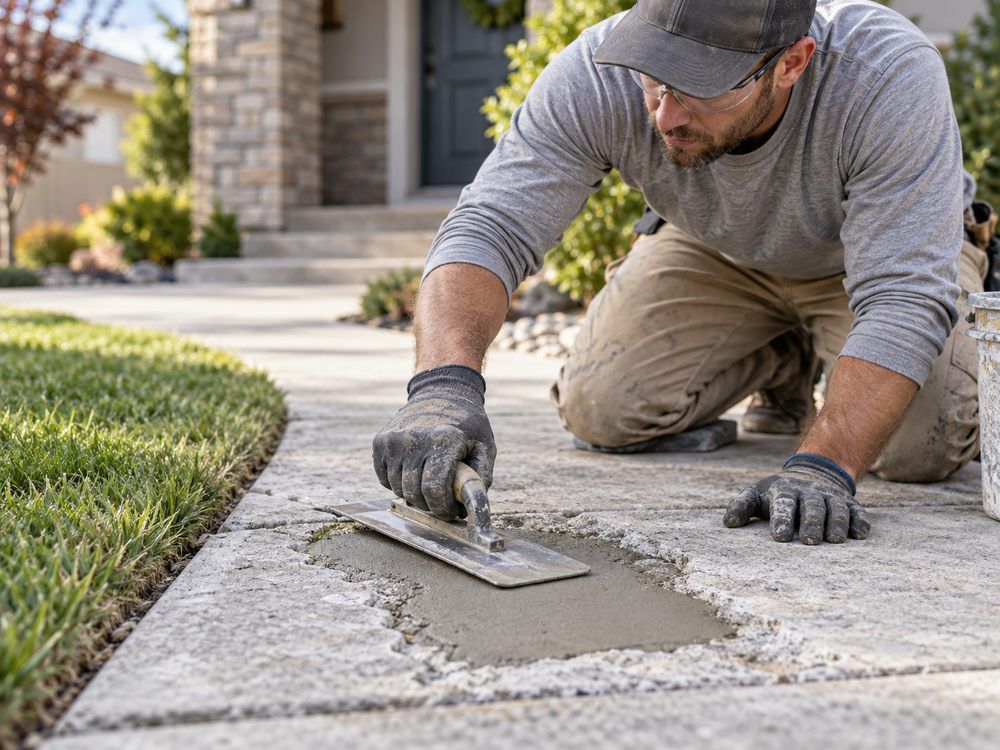
Cracks, uneven sections, and peeling concrete can leave you wondering whether your driveway needs a repair or a complete replacement. The right choice depends on the extent of the damage, the condition beneath the surface, and what you want the work to accomplish.
Repair may be appropriate when damage is limited and the surrounding concrete is sound. Replacement deserves consideration when deterioration is widespread, sections keep moving, or the driveway needs changes to its drainage or layout.
Before making a decision, have a concrete contractor in Denver evaluate the driveway as a whole. A crack’s appearance alone rarely tells the full story.
Start by Understanding the Problem
Different problems can look similar from above. A surface blemish is different from a slab that has lost support, and a stable crack is different from one that continues to widen or develop a height difference.
During an assessment, discuss:
- Where the damage appears and how much of the driveway it affects.
- Whether cracks or uneven areas have changed over time.
- Where rainwater and snowmelt collect.
- Whether previous repairs have held up.
- How vehicles use the driveway.
Photos taken over time can help show changes that may not be obvious during a single visit.
When Concrete Driveway Repair May Make Sense
Our concrete repairs service covers targeted work like the situations below.
Isolated, Stable Cracks
A limited number of cracks does not automatically mean you need a new driveway. Concrete can crack for several reasons, including shrinkage, temperature changes, and movement beneath the slab. The National Ready Mixed Concrete Association’s guide to cracking in concrete explains why cracks form. The cause and whether the crack is still moving matter when selecting a repair.
Ask whether sealing or another targeted treatment is appropriate. Understand what the proposed work will accomplish: treating a crack does not necessarily restore the slab’s original appearance or resolve movement beneath it.
Localized Surface Damage
Small areas of deterioration may be candidates for a compatible repair when the surrounding concrete remains sound.
The contractor should evaluate the depth and extent of the damage before recommending a product or method. Ask how the repaired area may differ in color and texture from the existing driveway.
One Damaged Section
Sometimes the practical choice falls between a small repair and a complete replacement.
If damage is confined to one panel or section, removing and replacing that area may be worth considering. The assessment should also address its support and connection to neighboring sections.
Ask whether a sectional replacement can solve the problem without leaving an awkward transition or overlooking damage nearby.
When Driveway Replacement Deserves Consideration
If you decide on a new surface, see our concrete driveway installation and replacement service.
Widespread Cracking and Broken Sections
When damage extends across much of the driveway, individual repairs can become difficult to justify.
Multiple broken panels, deteriorating edges, and recurring cracks deserve a broader evaluation. Ask the contractor to compare the scope of targeted repairs with the work required for replacement.
The decision should reflect the driveway’s overall condition rather than one universal crack-width rule.
Repeated Settlement or Movement
If a repaired area sinks again, the underlying cause may remain unresolved.
An uneven concrete driveway should be assessed for possible support, soil, water, or other site-related issues. Replacement may provide access to address conditions beneath the slab, but the proposed scope should explain what corrective work is included.
Replacing the concrete alone does not guarantee that movement will stop.
Extensive Surface Deterioration
A driveway that is flaking or peeling over a large area needs more than a cosmetic assessment.
The National Ready Mixed Concrete Association explains that scaling can develop when hardened concrete undergoes freezing and thawing, and that deicing chemicals can aggravate the problem.
A contractor should determine whether deterioration is limited enough for a suitable repair or extensive enough to make replacement more practical.
Drainage or Layout Changes
Replacement may also make sense when the driveway no longer meets your needs.
You may want to improve its connection to the garage, change its layout, or address areas where water collects. Discuss whether the proposed elevations and drainage can be achieved through limited work or require a larger replacement.
What About Resurfacing?
Resurfacing adds a new wearing surface over existing concrete. It should be considered only after assessing the condition of the concrete underneath and the requirements of the proposed system.
Ask these questions before choosing an overlay:
- Is the existing concrete a suitable base?
- How will cracks and joints be handled?
- Could existing movement affect the new surface?
- Will the added thickness create problems at the garage, sidewalk, or other transitions?
- What maintenance and limitations apply?
A fresh surface should come with a clear explanation of what it can—and cannot—address.
Compare Repair and Replacement Estimates Carefully
A repair usually covers less work than replacement, but the lower initial price does not settle the decision.
Request a written explanation of each option, including:
- The areas being treated or removed.
- Any work to address the cause of the damage.
- Preparation, materials, and finish.
- Demolition and disposal, where applicable.
- Expected appearance and limitations.
- Access restrictions and aftercare.
- Warranty terms, if offered.
For example, sealing cracks and replacing a settled panel are different scopes. Likewise, two replacement estimates may include different amounts of excavation and base preparation.
Compare what each proposal addresses before comparing the totals. Learn what affects the cost of concrete work in Denver.
Questions to Ask Before You Decide
A useful assessment should leave you with answers to five questions:
- What is causing the damage?
- Is the problem isolated or widespread?
- Will the proposed work address the cause or only the visible symptoms?
- What appearance and performance limitations should I expect?
- Why is this option appropriate for my driveway?
Be cautious about choosing solely from a photograph or a price per square foot. The driveway’s condition, access, and surrounding elevations can affect the recommendation.
Questions to ask before choosing a concrete contractor.
Discuss Your Denver Driveway With Barron Concrete Inc.
You don’t have to decide between repair and replacement before contacting a contractor. Start by explaining what you have noticed and what you want to improve.
Barron Concrete Inc. serves Denver and surrounding communities with concrete driveway installation, replacement, and repair services. Owner Luis Barrón is a second-generation concrete professional, continuing a family tradition that began with his father, Antonio Barrón, about 40 years ago.
If you’re looking for a concrete contractor in Denver, contact Barron Concrete to discuss your driveway and request an assessment and estimate.
Call (720) 656-0083 or request an estimate through our website.
Planning a concrete project in Denver?
Contact Barron Concrete Inc. to discuss your property, project goals, and finish options.
Related articles
- How to Choose a Concrete Contractor in Denver: Questions to Ask Before Hiring
Hiring a concrete contractor in Denver? Learn what to ask about estimates, preparation, drainage, insurance, and scheduling before choosing a contractor.
- How Much Does Concrete Work Cost in Denver? What Affects Your Estimate
What affects concrete work costs in Denver? Learn how project size, demolition, access, preparation, and finishes influence your concrete estimate.
- What Should a Concrete Contractor’s Estimate Include? A Denver Homeowner’s Checklist
Compare concrete estimates in Denver with a checklist covering preparation, materials, drainage, finishes, payment terms, and exclusions.